


In a startup digital marketing toolkit, B2B email marketing is like the Swiss Army knife. It is all about zipping nifty, tailored emails over to other businesses, whether it is for wooing new clients, keeping existing ones happy, or gently nudging those who might have forgotten you exist.
The golden rule? Permission. People choose to hear from you – it’s like getting RSVPs to a party you haven’t even planned yet! This ensures your emails become inbox superstars and keeps you on the good side of marketing etiquette. These automated, personalized email sequences are called drip marketing.
For startups, drip marketing is more than just a tool to push sales; it’s a strategic asset for growth and relationship building. Email marketing offers a cost-effective way to reach and engage a specific audience in an environment where resources are often limited. According to the Data & Marketing Association, the average return on email marketing investment is $42 for every $1 spent, highlighting its efficiency, especially for startups who are watching every penny.
Understanding B2B Drip Marketing
B2B drip marketing is like having a friendly chat with other businesses via email. It’s a key piece of the whole B2B marketing puzzle, all about building genuine, strategic connections. Think of it as reaching out to the movers and shakers, the decision-makers, and the big players in other companies. It’s a bit different from chatting up everyday consumers – it’s more about understanding their business needs and speaking their language. It’s less about making a quick sale and more about nurturing a relationship, kind of like making a new business buddy!
Key Differences from B2C Drip Marketing
B2B drip marketing stands in contrast to its B2C counterpart, focusing on longer sales cycles and typically involving larger deals. The essence of B2B communication lies in crafting informative and value-driven messages that prioritize relationship building over time. It’s a thoughtful journey of nurturing trust and engagement rather than pushing for immediate sales.
Building Your Email List
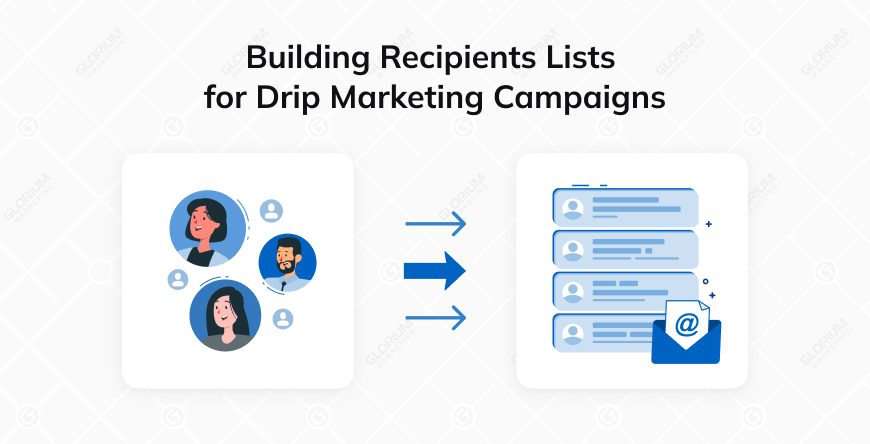
A strong, organically developed email list lies at the heart of effective B2B drip marketing. This isn’t just about numbers; it’s about cultivating a list of engaged, interested contacts. A thoughtfully assembled list means your emails land in the inboxes of people who are actually keen to see what you have to offer.
The quality of your email list is a major player in how well your campaigns perform. It’s the driving force behind key metrics, such as how many people open your emails, click on your links, and take the actions you’re aiming for. In short, a top-notch email list can be the difference between an email campaign that soars and one that flops.
Organic Growth Strategies
Expanding your email list organically doesn’t have to be a daunting task. One of the most effective strategies is to entice potential subscribers with something valuable. Think of it as a trade – their email address for your valuable content. This could be in the form of insightful eBooks, detailed whitepapers, or exclusive access to informative webinars.
Incorporating sign-up forms on your website is another smart move. Make them easily accessible, perhaps on your homepage or as a pop-up. Your blog is also a powerful tool in this regard; use engaging blog content as a springboard to encourage sign-up. Don’t forget social media channels – they’re perfect for promoting your newsletter and reaching a wider audience.
The key here is to make every interaction meaningful and beneficial. When potential subscribers see the clear value in your offering, signing up becomes a no-brainer.
Segmentation and Targeting
Segmentation in drip marketing is like creating bespoke experiences for different groups within your audience. By breaking down your email list into smaller segments based on criteria like industry, company size, job title, qualification score, etc., you can craft messages that hit the mark much more effectively.
This isn’t just a nice theory; it’s backed by solid data. For instance, a study by Mailchimp highlighted that segmented email campaigns can see a 14.31% higher open rate than their non-segmented counterparts. That’s a significant uptick, demonstrating just how powerful and effective a well-thought-out segmentation strategy can be in resonating with your audience.
Effective Targeting Techniques
Imagine crafting emails that feel almost personalized, whether it’s the tone, the content, or the offers you include. Some segments might appreciate frequent updates, while others may prefer a less is more approach. And special offers? Tailor them to each segment’s specific interests and needs to make an impact.
For startups, leveraging CRM tools is a game-changer. These tools can help you not just segment your lists with precision but also automate sending targeted emails. This means your messages hit the right inboxes at the right time, with content that resonates, making your drip marketing efforts more efficient and effective.
Creating Compelling Content
When it comes to the content of your B2B emails, think of it as serving a gourmet meal to a discerning diner. Your audience, composed of business clients, is looking for content that isn’t just appetizing to read but also nourishing for their business needs. They’re less about the flashy, fun stuff (although some humor is not forbidden) and more about what can genuinely help them tackle their challenges or streamline their operations.
In this context, your emails should be a treasure trove of utility. Fill them with rich industry insights, the latest updates on your products, in-depth case studies, or educational content that sheds light on complex topics. The aim is to strike a balance between being captivating and genuinely helpful. If your email can make a reader think, “This is exactly what I needed to know!” then you’ve hit the bullseye.
Tips for Engaging Content
Creating content for B2B emails that really grabs attention and keeps readers engaged is a bit like being a skilled chef – you need the right ingredients and a good recipe. Start by getting into your audience’s shoes to understand what keeps them awake. What are their biggest challenges and pain points? Address these head-ons in your emails to show that you understand their problems and have the solutions.
When it comes to the tone and style of your writing, think “clear,” “concise,” and “professional.” You want to communicate your message effectively without any fluff. And let’s not forget the subject lines – they’re like the appetizer to your email’s main course. A compelling subject line can distinguish between an opened email and one lost in the abyss of an inbox.
Lastly, no email is complete without a strong call-to-action (CTA). This is your cue to the reader on what to do next. Whether it’s downloading a valuable resource, signing up for an informative webinar, or simply heading to your website for more information, your CTA should be clear and enticing, gently guiding your readers down the path you want them to take.
Designing Effective Emails
In B2B drip marketing, the visual design of your emails is just as crucial as the words you choose. Think of it as the suit and tie accompanying a firm handshake – it must make a good impression. Sure, there are times when a simple, text-based email does the job perfectly, especially when the message is straightforward. But even in simplicity, the design plays a subtle yet significant role.
Emails without elaborate design tend to perform more effectively when reaching out to cold audiences, particularly when recipients aren’t anticipating communication from your company. In contrast, mailings targeting warm, opt-in audiences should strive for seamless integration, incorporating moderate creativity and visual structure. This approach aims to captivate the recipient’s attention without overly emphasizing anti-spam system compliance.
The key is to ensure that your email’s design aligns seamlessly with your brand’s identity and the message you’re conveying. This means using your brand colors, logo, and fonts consistently to create a look that’s immediately recognizable to your recipients as yours. A professional and cohesive design makes your emails more visually appealing and reinforces your brand’s credibility and professionalism. Remember, in the B2B world, the aesthetics of your communication can speak volumes about your business.
Best Practices in B2B Email Design
The design of your emails is a vital ally in making complex information more digestible. Imagine your email as a well-organized, inviting classroom where everything is in place, aiding learning.
The key elements for designing effective and engaging emails:
- Well-organized layout
- Arrange content to guide readers smoothly from start to finish
- Use a clean, straightforward design for easy navigation
- Brand integration
- Incorporate your brand’s colors and logos
- Apply branding judiciously for professionalism and recognition
- Responsive design
- Ensure the email design adapts well across various devices (phones, tablets, desktops)
- Aim for a consistent viewing experience on all platforms
- Balanced design elements:
- Avoid overloading emails with excessive graphics or complex layouts.
- Ensure graphics and design elements enhance rather than overwhelm the content
- Watch out for long loading times that can frustrate readers
- Striking the right balance:
- Aim for a design that engages but doesn’t overshadow the message
- Maintain a focus on readability and message clarity
Personalization and Customization
Personalization in B2B drip marketing is a powerful tool, and it’s much more than just a friendly “Hi [Name]” at the beginning of an email. It’s about crafting content that resonates on a deeper level with each recipient, making each message feel like it was written just for them. This approach acknowledges and addresses their specific needs, challenges, and interests.
By making each recipient feel seen and understood, you’re not just sending an email; you’re building a relationship and driving meaningful engagement.
Techniques for Personalized Emails
Startups have many tools and techniques at their disposal to bring personalization into their drip marketing strategy effectively. The key is to utilize the rich data you have to create emails that resonate personally with each recipient.
As we have mentioned earlier, your CRM system is a goldmine of information. It allows you to segment your audience based on various factors like their industry, past interactions with your business, or their position in the sales funnel. This segmentation enables you to tailor your messages so that they speak directly to each group’s specific needs and interests.
Another powerful technique is the use of dynamic content. This type of content automatically changes based on the recipient’s behavior, preferences, or demographic data. For instance, an email could display different images or offers depending on the recipient’s past interactions with your website or their stated preferences.
We recommend crafting emails that address each segment’s particular challenges or interests. This approach ensures that your messages are not just general broadcasts but feel like a one-to-one conversation. The goal is to create a sense that each email has been handcrafted for the individual receiving it.
By employing these strategies, startups can create a more engaging and effective drip marketing campaign. Personalization, when done right, not only increases the relevance of your communications but also strengthens the relationship between your brand and your audience.
Optimizing for Mobile
The shift towards mobile usage in the business world is remarkable, and it’s fascinating to see how this trend influences email communication. With a whopping 42% of emails being opened on mobile devices, as highlighted by the Litmus report, it’s clear that optimizing emails for mobile is no longer just an option – it’s a necessity!
The key here is to think about the user experience. People are often on the go, checking their emails between meetings, commuting, or even during a quick coffee break.
This means your emails must be concise, easy to read, and visually appealing on smaller screens.
Tips for Mobile-Friendly Emails
To ensure your emails are mobile-friendly, use a responsive email design that adjusts to different screen sizes. Also, consider the size of buttons and links for easy tapping, and avoid large images that can slow down loading times on mobile networks.
Here are a few tips to ensure your emails shine on mobile devices:
- Keep it short and sweet. Mobile screens cut off longer subject lines, so getting to the point quickly is crucial.
- Your emails should look good and be easily navigable regardless of the device. A responsive design automatically adjusts to fit the screen, whether it’s a phone, tablet, or desktop.
- Mobile readers often scan content. Use bullet points and short paragraphs to make your emails skimmable.
- What do you want the reader to do next? Make it obvious and easy to click, even on a small touchscreen.
- Before sending out an email, test how it looks on different devices. This can help catch any formatting issues that might detract from the reader’s experience.
Automation in B2B Drip Marketing
Embracing automation within your B2B drip marketing strategy, especially utilizing platforms like HubSpot, is akin to cultivating a steadfast ally that effortlessly engages your target audience. These tools operate seamlessly, delivering timely and pertinent messages without requiring constant manual intervention.
From the straightforward deployment of autoresponders to the intricacies of systems responsive to specific client actions or industry behaviors, email automation technologies empower startups to foster meaningful connections with minimal ongoing effort.
Consider a scenario where a potential client explores your business website using HubSpot. The integrated CRM captures their interactions, assigns lead scores based on pages viewed, and initiates a tailored email sequence. If the prospect visits the pricing page, HubSpot notes this action, adjusts their lead score, and triggers an email sequence highlighting key features and benefits, followed by another email addressing common pricing concerns. It’s akin to having a virtual assistant that comprehends your B2B audience intricately, foreseeing their requirements and preferences with each visit to your site.
Implementing Automated Campaigns
Implementing automated campaigns in your B2B drip marketing strategy offers a streamlined approach to engage your audience at key touchpoints. Here are examples of automated B2B drip campaigns that can elevate your communication game:
Welcome emails for new subscribers
- Immediately greet new subscribers with a warm welcome email.
- Provide a brief introduction to your brand and set expectations for future communications.
- Consider including a special offer or exclusive content to kick off the relationship on a positive note.
Follow-up emails after a download or a webinar
- Automate a series of follow-up emails tailored to individuals who have downloaded resources or attended a webinar.
- Provide additional value by offering related content, diving deeper into the topic, or addressing frequently asked questions.
- Use this opportunity to subtly showcase your products or services in the context of the downloaded content.
Re-engagement emails to inactive subscribers
- Identify and segment inactive subscribers based on their lack of engagement over a defined period.
- Implement a re-engagement campaign to reignite their interest.
- Consider offering a special incentive, seeking feedback, or showcasing new and exciting updates about your startup.
Automation ensures consistent communication and can help more effectively nurture leads through the sales funnel. These automated campaigns save time and deliver a personalized and timely experience for your audience, increasing the likelihood of conversion and fostering stronger connections with your B2B clients.
Measuring Success – Analytics and Metrics
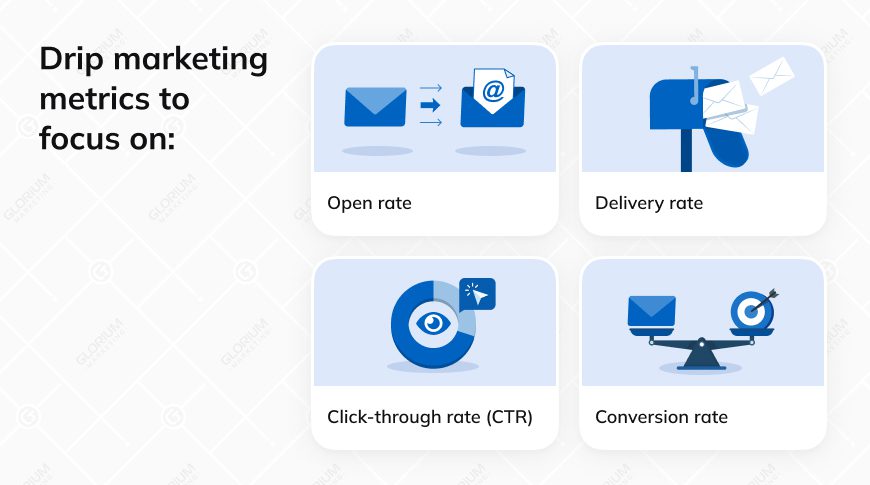
To measure the impact and effectiveness of your B2B drip marketing campaign, keeping a close eye on key metrics is crucial. Here are essential metrics to track:
Open rate
- Reflects the percentage of recipients who opened your email
- Indicates the effectiveness of your subject lines in capturing attention
Click-through rate (CTR)
- Reveals the percentage of recipients who clicked on links within your email
- Demonstrates how engaging and enticing your content is
- A higher CTR signifies that your audience finds value in the information provided
Conversion rate
- Represents the percentage of recipients who completed the desired action after clicking through
- Reflects the ultimate effectiveness of your emails in driving the intended outcome, such as making an order or filling out a form
- A higher conversion rate indicates that your email content successfully motivates your audience to take the desired action
Delivery rate
- Reflects the percentage of emails sent that successfully reach the recipients’ inboxes
- High delivery rates are crucial for ensuring that your messages are reaching your intended audience
By regularly monitoring these key metrics, you gain insights into the performance of your B2B drip campaigns. This data allows you to refine and optimize your strategies, ensuring that your emails consistently resonate with your audience and drive meaningful results for your startup.
Analyzing and Interpreting Data
Regularly reviewing these metrics is not just about tracking performance but is a strategic practice that empowers you to discern what works and what doesn’t in your drip campaigns. This continuous optimization is key to staying responsive to your audience and achieving better results over time.
Integration with tools such as Google Analytics 4 can take your understanding to the next level. By merging the data from your email platform with the broader analytics provided by GA4, you gain deeper insights into how your emails contribute to your overall marketing goals.
This synergy allows you to see the bigger picture, understand user behavior beyond the email click, and refine your strategies based on a comprehensive view of your audience’s journey.
Here’s why integrating tools like Google Analytics is a game-changer:
- Gain a comprehensive understanding of how your audience interacts with your brand across different channels, not just in their inboxes.
- Attribute conversions accurately by tracing the customer’s journey from the initial email interaction to subsequent actions on your website.
- Dive into user behavior beyond the email click, exploring what pages they visit, how long they stay, and what actions they take after interacting with your email content.
- Align your drip campaigns with specific goals, whether it’s driving website traffic, increasing downloads, or boosting sales, and track these objectives seamlessly.
By making use of the integration of GA4 with your email platform, you transform data into actionable insights. This powerful combination empowers you to make informed decisions, refine your strategies, and ensure that every email contributes meaningfully to your startup’s overarching marketing objectives.
Case Studies and Examples
Drip email marketing campaigns prove to be a powerful and effective channel for driving traffic and generating leads. We consistently leverage this strategy for promoting our agency and recommend its inclusion in our clients’ marketing plans. Drawing from our experience, we can provide a couple of real examples, with a noteworthy distinction being that our recipient lists blend opt-in contacts and those sourced through our partners, such as webinars, conferences, and professional events.
Case #1
As part of our ABM initiative, we executed a drip marketing campaign comprising 16 automated emails. This campaign targeted almost 500 recipients within a specific startup niche, ensuring that our content and messages were tailored to resonate with that industry. The results were as follows:
- 6,293 letters delivered
- 41% open rate
- 14% click-through rate
- 3% conversion to leads (11 MQLs)
- 18% conversion to sales (2 deals)
Ultimately, this drip marketing campaign yielded an impressive 245% ROI. While we engaged in various activities, it’s noteworthy that the leads and sales mentioned earlier were specifically attributed to the effectiveness of our email marketing efforts.
Case #2
In the second case study, a parenting platform operating as a community of mom influencers faced the challenge of achieving rapid growth. Initially relying on a sales-driven strategy with limited marketing insights, the platform struggled with the lead-generation process, resulting in irrelevant or unqualified B2B leads.
To tackle this issue, we implemented a two-pronged solution involving inbound marketing and targeted drip email campaigns. Notably, our drip campaigns were executed predominantly with “cold” contacts who had no prior knowledge about the platform, alongside a small portion of opt-in contacts. Given the diverse nature of different small businesses as our target audience, we couldn’t focus on a specific industry. Therefore, we strategically identified common pain points and interests among all the prospects provided by the client.
The outcome was the generation of almost 1000 MQLs within a freemium model, contributing to a substantial increase in monthly revenue for the client. The success of this approach was credited to well-crafted email campaigns, witnessing open rates surging from 14% to 35%, with an average click rate of 4.81%.
Legal and Compliance Considerations
Ensuring compliance with drip marketing laws is paramount for the success and reputation of your startup. The CAN-SPAM Act in the U.S. and the GDPR in Europe set clear guidelines for ethical email practices. These laws emphasize the importance of obtaining explicit consent, protecting user privacy, and providing accessible opt-out options. Adhering to these regulations is a legal requirement and a crucial step in building trust with your audience.
Transparency in data usage, robust privacy protection measures, and ethical communication practices contribute to a positive relationship with your customers. By following these guidelines, you safeguard your startup from potential fines and establish a foundation for long-term success based on trust and integrity.
In summary, the key aspects to focus on include:
- CAN-SPAM Act and GDPR compliance
- Obtaining clear consent and communicating data processing purposes
- Safeguarding user data and preventing unauthorized access
- Implementing visible and accessible opt-out mechanisms
- Prioritizing transparency in privacy policies and communication
- Upholding ethical email practices and respecting user preferences
Future Trends in B2B Drip Marketing
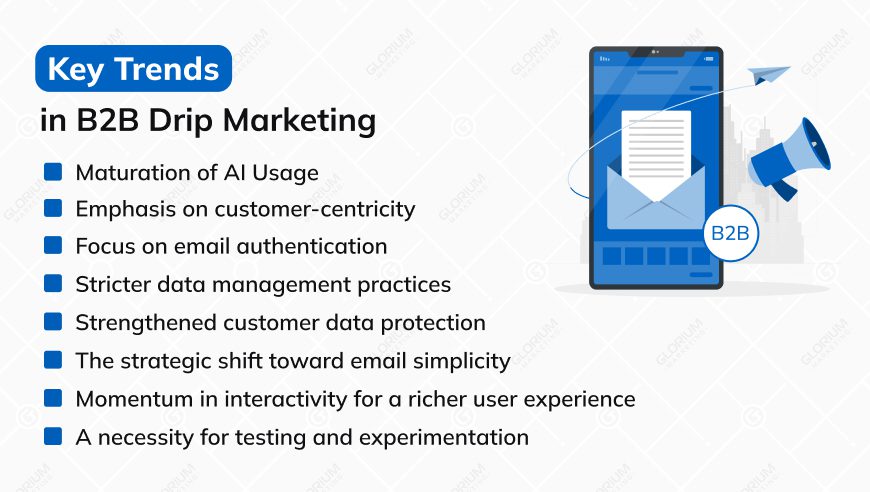
The world of drip marketing is brimming with exciting changes that invite thoughtful adaptation. According to Mailjet, one standout shift is the maturation of AI tools, such as writing assistants and subject line generators, bringing a new level of sophistication to our strategies.
Customer-centricity becomes paramount, encouraging marketers to embrace advanced personalization beyond brand-centric messages. The spotlight on email authentication, spurred by recent requirements from major providers, highlights the crucial role of secure communication in our digital landscape.
Stricter data management practices, including transparent double opt-ins and landing pages, align seamlessly with the growing emphasis on user consent. To fortify against phishing attacks, there’s a renewed commitment to robust customer data protection, integrating authentication methods like BIMI.
A strategic tilt towards email simplicity, focusing on authenticity, pairs harmoniously with the surge in interactivity for a more engaging user experience.
Conclusion
B2B email marketing is a versatile tool in a startup’s digital marketing arsenal, facilitating tailored communication with other businesses. The golden rule of permission ensures that emails are welcomed, akin to receiving RSVPs for an unplanned party. Drip marketing, with its automated and personalized email sequences, becomes a strategic asset for startups aiming not just for sales but also for sustainable growth and relationship building.
At the heart of effective B2B drip marketing lies the cultivation of a strong, organically developed email list. Quality, not just quantity, is paramount, ensuring that emails reach engaged, interested contacts. Organic growth strategies, such as offering valuable content in exchange for email addresses, incorporating sign-up forms on websites and blogs, and utilizing social media channels, contribute to building a meaningful and responsive audience.
B2B drip marketing is more effective when you segment and target your audience based on their needs and preferences. Using CRM tools, you can easily create and manage different segments and automatically send personalized emails. Your emails should contain engaging and useful content that showcases your industry knowledge, product features, customer stories, and learning resources. You should also design your emails to match your brand style and image. These steps will help you achieve your B2B drip marketing goals.
Ready to make the most out of your drip campaigns? Let’s connect! Schedule your free 30-minute consultation with Glorium Marketing today and set the course for a future of digital marketing success.